HOME
> NOURISHING NEWS
January 2012
Going Green
“Going Green” is a term used for making lifestyle changes to preserve our environment. Sustainable living, buying green and recycling are three areas of change most of us can make in an effort to go green. This encompasses what we eat, where and how we purchase food and cleaning products, and the way we dispose of our trash. You may be going green without even knowing it! Having a go-green attitude not only will make a positive impact on our environment, but it can save us money and improve our health.
Sustainable Living - Limiting the use of natural resources which can also save us money. Conserve by using less water, electricity and gasoline.
- Wash clothes in cold water, unplug appliances, use fluorescent light bulbs, lower your thermostat.
- Take shorter showers, use low-flow shower heads and toilets.
- Buy local to support the local economy and reduce fuel usage. Local food can be picked at their peak ripeness, providing more flavor and nutrition. Grow your own or start a community garden. Share the work and harvest with family and friends.
- Check with your local water & power provider for additional tips and savings.
- Share a ride with a friend or, even better, walk or take public transportation if able to do so.
Buy Green - These products are environmentally friendly since they minimize impact on our air, water, soil, animal life and plants.
- Buy products with little packaging, along with recycled paper products. Use reusable bags when shopping.
- Use non-toxic household cleaners.
- Consider organic foods - free from harmful pesticides or fertilizers and may have more phytonutrients. Organic often costs more which can be a challenge on a fixed income. Start with the Dirty Dozen; be sure they are “certified organic”.
The Dirty Dozen
If you want to “go green” with produce but can’t afford to buy everything organic, focus on produce with edible skins:
Spinach•Celery•Bell Pepper•Lettuce•Peaches•Potato
Nectarines•Strawberries•Apples•Cherries•Grapes•Pears
Recycling, Reusing & Repurposing—By recycling all that is possible (glass, plastic, paper, metal, food) and reusing useful items, the amount of waste we throw away can be minimized. Trash has to go somewhere: if it is not recycled, it goes into a landfill.
- Use the recycling bins provided by the City. Recycle batteries, cell phones & electronic waste at appropriate locations.
- Try composting garden cuttings and kitchen scraps.
- Use a reusable water bottle instead of buying bottled water.
- You can often reuse items such as shopping or gift bags.
- Repurpose (reuse items for another purpose) such as: the other side of printed paper as memo pads, empty glass jars as containers, old cards as gift tags, cut old worn clothing into dust or cleaning cloths, use newspapers, magazines or junk mail as liners in a cats litter box.
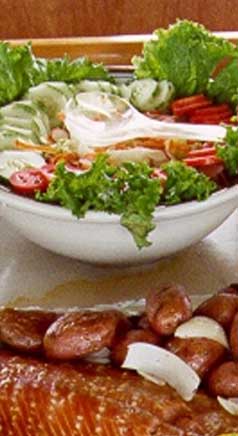
We want to introduce you to the new USDA message for healthy eating, www.ChooseMyPlate.gov. This replaces the food guide pyramid. We may not be able to make a perfect plate each time, but this month focus on the vegetable component. The recommended servings for fruits &vegetables remains the same, 4½ to 5 cups daily. Make half your plate vegetables at lunch and dinner. Keep in mind your senior lunch has a minimum of 1 cup of fruits & vegetables, and often more. You are more than half way there!
NOURISHING NEWS ARCHIVES
©CNS/RQA/CA, INC